This page was translated automatically using artificial intelligence (DeepL). The German version is binding. More information about automatic translation
MultiDATBot


Description
Motivation
The use of collaborative robots (cobots) in industry – for example, in welding – is continuing to grow. However, there are as yet very few solutions in which these robots not only carry out tasks but also collect measurement data or are networked with one another at the same time. Small and medium-sized enterprises (SMEs) in particular, which often produce in small batches, still frequently check the quality of their products manually and using a variety of methods. This is time-consuming, prone to errors and requires additional training. A user-friendly and practical data system can help here: it enables data to be collected automatically and used easily. This makes processes more efficient and significantly improves collaboration between humans and machines.
Approach
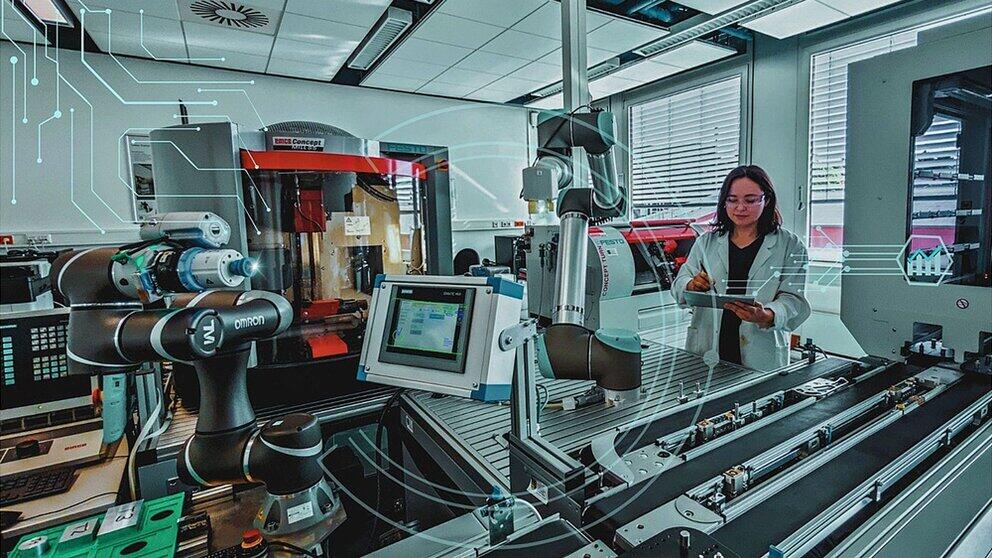
The MultiDatBot research project is developing a system in which several collaborative robots (cobots) work together and combine typical tasks such as material handling, measurement and welding. The aim is to make these processes – particularly in small-batch production – simpler, more efficient and better coordinated. To this end, an intelligent data system is being developed that collects key information from the production processes and presents it in a clear and understandable way. At the same time, a digital learning system is being integrated to support staff with training content that is easy to understand and tailored to individual needs. This enables the robots not only to work together, but also to collect and use data to automatically improve or adapt subsequent work steps. In addition, the learning system helps to provide targeted further training for skilled workers. Finally, the entire system will be tested in a realistic production environment to demonstrate that it works in practice.
Innovations and prospects
The integrated multi-cobot system combines collaborative robotics, automated measurement technology and AI-supported data processing within a networked data ecosystem. This ecosystem supports quality inspection and process preparation, even for non-specialist staff. It reduces error rates, increases process efficiency and helps secure a skilled workforce. The learning management system adapts dynamically to parameters and learning needs through learning analytics. Targeted further training provides impetus for widespread application and increased competitiveness.
Project partners
Chair of Automated Joining Processes and Simulation
Chair of Digital Manufacturing and Quality Monitoring
Chair in Manufacturing Automation