This page was translated automatically using artificial intelligence (DeepL). The German version is binding. More information about automatic translation
VisKIMa

Description
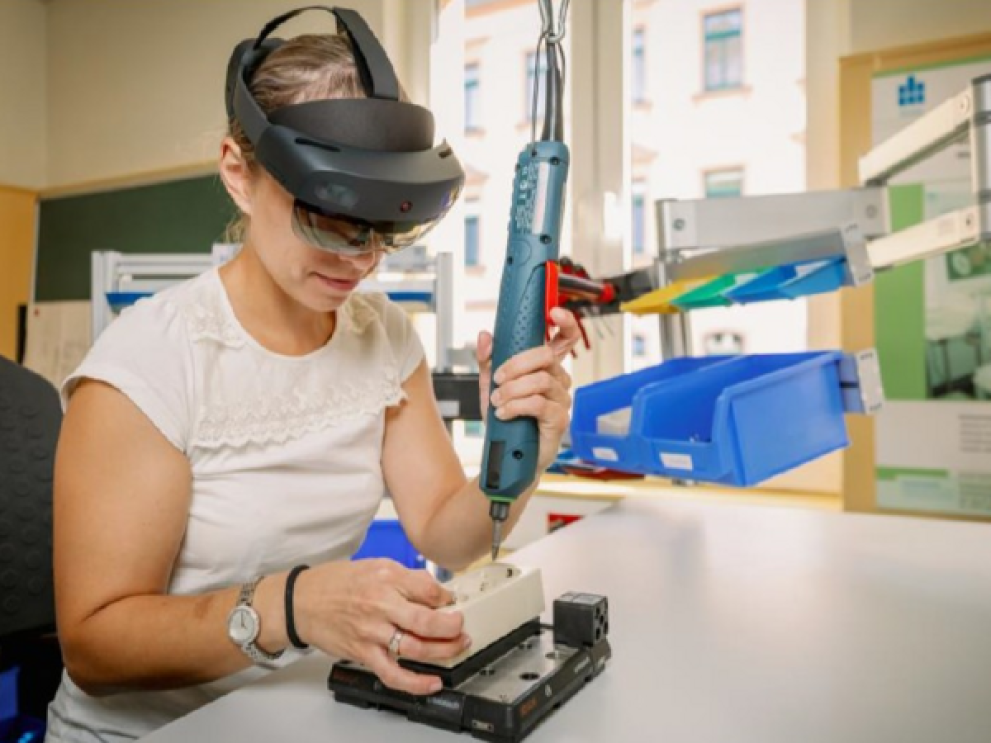
The overall aim of the project is to comprehensively identify and adapt the potential of augmented reality (AR) and artificial intelligence (AI) in the field of material provision, as a precursor to further research. AI and AR can be utilised in a variety of ways in material supply, both in industry and in academia. For example, assembly objects are to be recognised by a camera and AI, and the essential information required for assembly is to be displayed for the user within the AR field of view of the glasses. It is also important to integrate existing techniques, such as ‘pick-by-light’ for order-picking tasks and material supply at assembly workstations, using AR technology as a new application of the technology. This is referred to here as ‘pick-by-vision’. Above all, the use of these technologies provides support when assembling small quantities (1–50), in cases of repetitive assembly, or for staff required to work flexibly. The potential applications are further enhanced by the trend towards producing ever-smaller batch sizes whilst the variety of variants increases. This places an enormous strain on assembly staff. Among other things, this can help reduce the frequency of errors (e.g. picking up the wrong part or assembly, incorrect installation), which demonstrates the enormous potential of innovative, application-oriented solutions that combine AR technology with AI.
As part of the project, the fundamentals of augmented reality (AR) technologies – in terms of both hardware and software – were first established. A list of requirements was drawn up to provide optimal support for material supply. In addition, the AR technology was integrated with the material supply process to ensure seamless integration. This was implemented in the project using two scenarios.
As part of the project, the fundamentals of augmented reality (AR) technologies – in terms of both hardware and software – were first established. A list of requirements was drawn up to provide optimal support for the provision of materials. In addition, the AR technology was integrated with the provision of materials to ensure seamless integration. This was implemented in the project using two scenarios.
Scenario 1: Display of assembly object and step
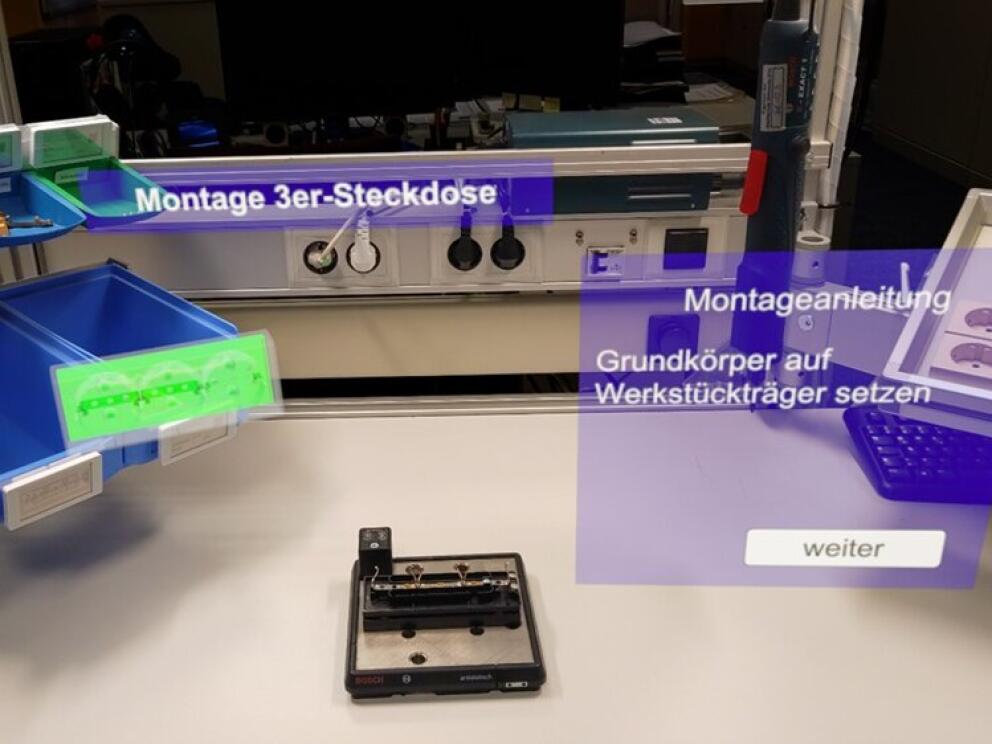
provides support for the assembly worker. The AR headset (in this case: Microsoft HoloLens 2) displays the relevant assembly object transparently. The transparent display makes it possible to highlight the component currently being assembled or disassembled in colour within the 3D model whilst still perceiving the real-world environment. In addition, the assembly worker receives instructions for the step to be carried out on the right-hand edge of the AR glasses’ field of view (Figure 1).
Scenario 2: Visual projection (Pick by Vision) on the container
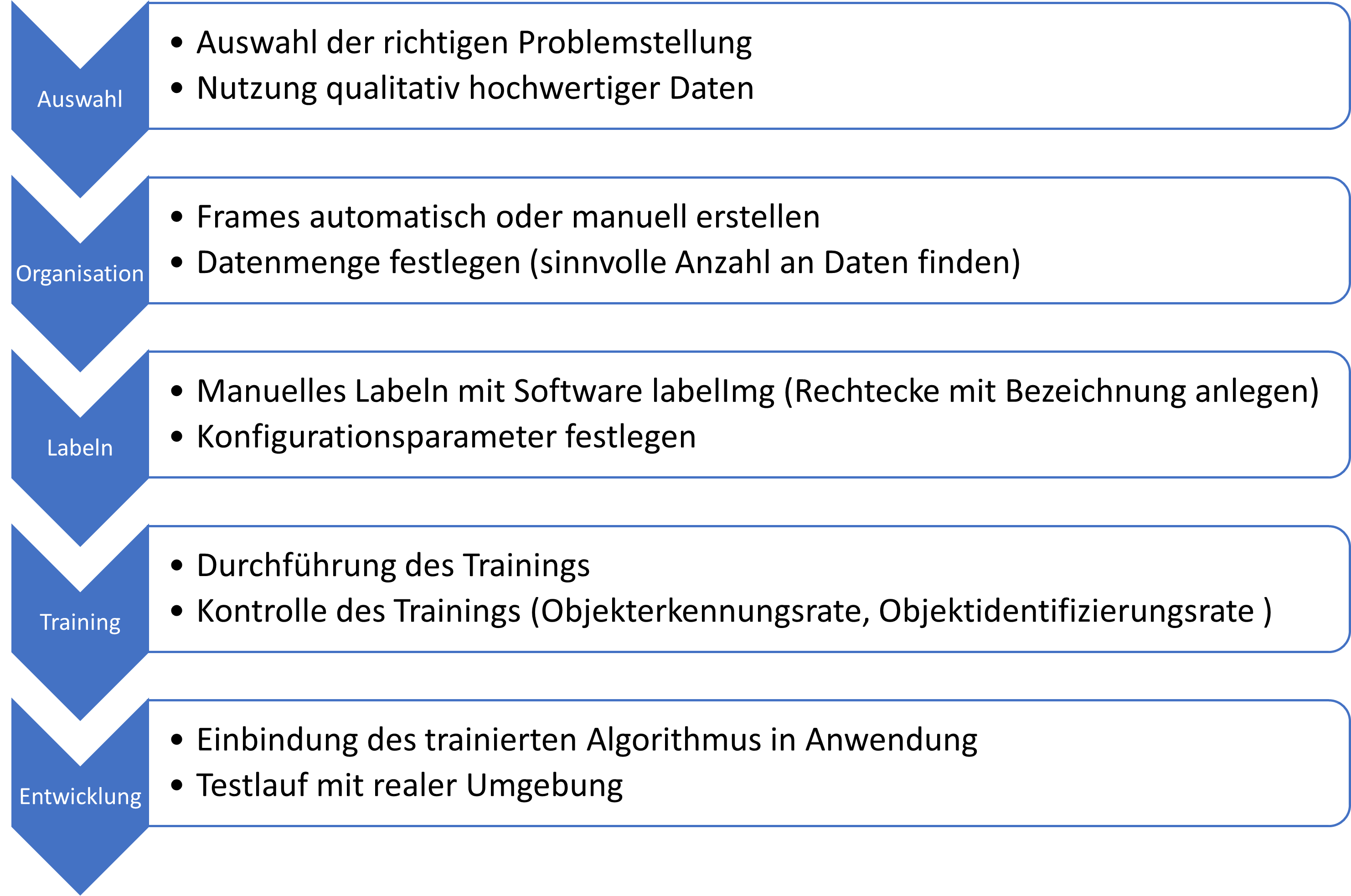
This scenario focuses on the integration of ‘Pick by Vision’ at the manual assembly workstation. To this end, the relevant physical container containing the components required for the assembly step is to be highlighted in colour. To identify the correct container or components, an approach to object recognition of the components was developed, amongst other things (Figure 2). This approach is based on the AI method of machine learning (ML), specifically deep learning using neural networks.